

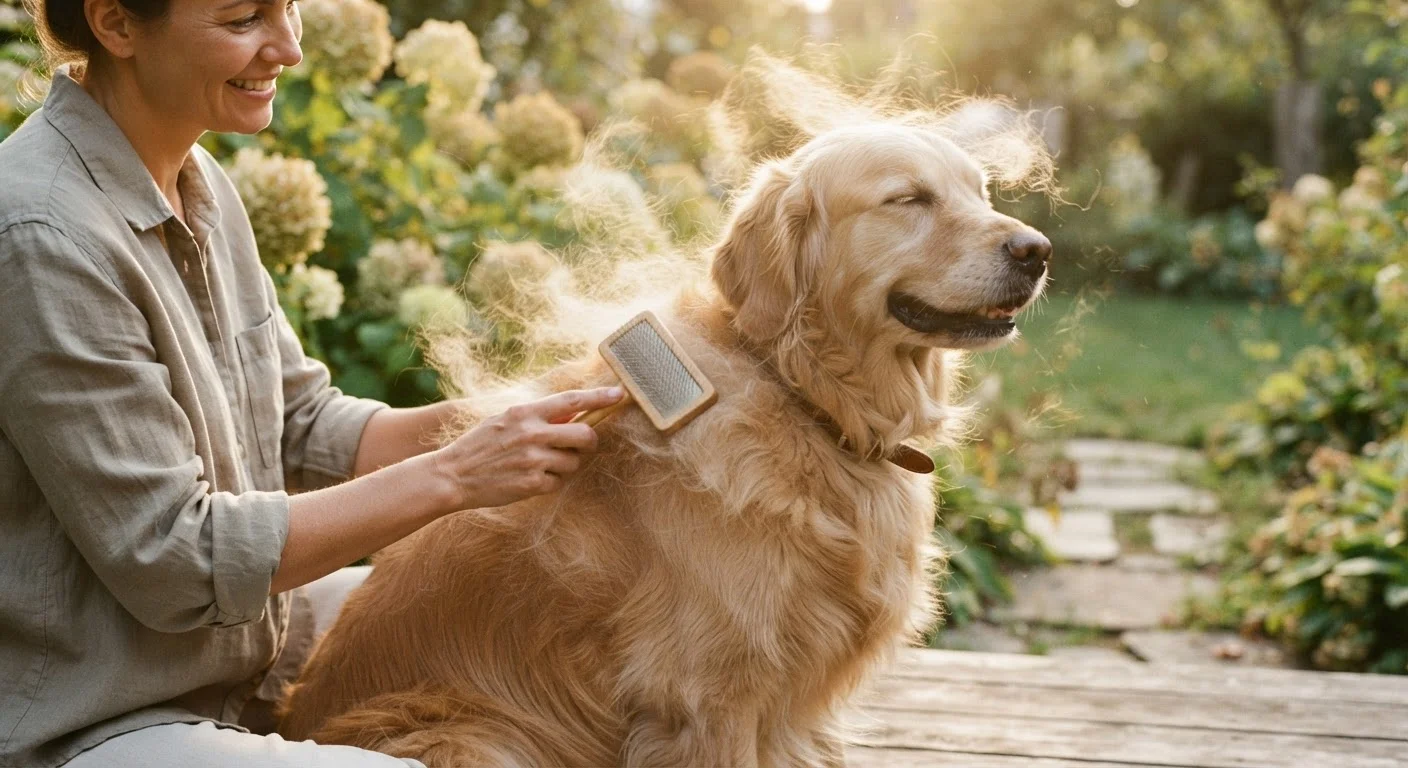
Why Pets Shed — and Why It Varies So Much
Shedding isn't a problem to solve — it's a biological process. Hair grows in cycles: a growth phase, a transitional phase, and a resting phase that ends with the hair falling out. For most pets, this cycle runs continuously, with environmental cues like shifting daylight prompting more dramatic seasonal purges.
Breed structure matters enormously here. Double-coated breeds — those with a dense undercoat beneath a coarser outer layer — tend to shed in dramatic seasonal waves. Single-coated breeds shed more modestly and consistently. Cats follow similar patterns, with long-haired breeds requiring more management than short-haired ones.
Age also plays a role. Puppies and kittens shed their softer juvenile coats, often around four to six months of age, before their adult coat grows in. Senior pets may experience changes in coat texture and density as hormone levels shift. For a broader picture of how your pet changes across life stages, see our guide on behavioral and physical changes through a pet's life.
~10,000
Hair follicles on an average dog
Veterinary dermatology references note that follicle density varies significantly by breed, which directly affects shedding volume.
2x per year
Peak shedding periods for double-coated breeds
Most double-coated dogs and cats experience concentrated shedding seasons in spring and fall, tied to changes in daylight length.
~6 months
Age when puppies shed juvenile coat
Veterinary sources indicate most puppies begin transitioning to their adult coat between four and six months of age.
Seasonal Patterns: What to Expect and When
Spring and fall are the two peak shedding windows for most double-coated dogs and cats. In spring, pets shed their thick winter undercoat to prepare for warmer months. In fall, a lighter summer coat makes way for denser winter growth. Both transitions can produce what seems like alarming amounts of loose fur — but for many breeds, this is entirely expected.
Indoor pets experience a modified version of these patterns. Because artificial lighting and climate control dampen the environmental signals that trigger shedding cycles, indoor cats and dogs often shed more steadily throughout the year rather than in concentrated seasonal bursts. This doesn't signal a health problem, but it does mean that year-round grooming habits matter more.
Brushing During Peak Shedding Season
During spring and fall coat transitions, increase brushing frequency to daily sessions for double-coated breeds. Working outdoors or on an easy-to-clean surface makes cleanup much easier. A de-shedding brush or undercoat rake designed for your pet's coat type can remove significantly more loose fur per session than a standard bristle brush.
Incorporating shedding management into a broader seasonal routine makes it far less overwhelming. Our article on building a year-round preventive care routine outlines how grooming fits alongside other seasonal health habits.
When Shedding Signals Something More
Normal shedding is diffuse and relatively even across the body. Hair loss that raises concern looks different: patchy or asymmetrical bald spots, skin that appears red, flaky, greasy, or irritated, or shedding that comes on suddenly without a seasonal trigger.
Several health conditions can cause abnormal fur loss in pets, including:
- Allergies — environmental, food-related, or contact allergens can inflame skin and disrupt hair follicles
- Parasites — fleas, mites, and ringworm (a fungal infection, despite its name) cause localized or widespread hair loss
- Hormonal imbalances — conditions like hypothyroidism in dogs or hyperthyroidism in cats affect coat quality significantly
- Stress or anxiety — behavioral over-grooming, especially in cats, can produce visible hair loss
If shedding is accompanied by scratching, skin changes, lethargy, or appetite shifts, a veterinary evaluation is the right next step. This article provides general information only and is not a substitute for professional veterinary advice.
Shedding vs. Hair Loss: A Key Distinction
Normal shedding involves loose hairs releasing evenly from all over the coat. Alopecia — the clinical term for abnormal hair loss — typically produces visible thinning, bald patches, or skin changes. If you're unsure which you're seeing, photographing the affected area and sharing it with your veterinarian is a practical first step. Early evaluation leads to better outcomes for most underlying causes.
Diet, Grooming, and Coat Health
A coat is only as healthy as the nutrition supporting it. Pets fed a complete, balanced diet generally maintain better coat condition than those eating low-quality food. Omega-3 fatty acids — found naturally in fish-based proteins — are consistently linked to improved skin barrier function and reduced shedding caused by dry, brittle hair. Talk to your veterinarian before adding supplements, as appropriate dosing depends on your pet's size, diet, and health status.
Grooming is the most practical tool owners have. Regular brushing removes loose, dead hair before it lands on furniture and also distributes the natural skin oils that keep a coat conditioned. For double-coated breeds during peak shedding, daily brushing is often necessary. For short-haired cats and dogs, once or twice weekly is usually sufficient.
Bathing frequency also affects the coat. Washing too often strips protective oils; too rarely allows buildup that can worsen shedding and skin issues. Our guide on how often to bathe your dog covers veterinary guidance by coat type. For hands-on techniques, grooming at home safely walks through brushing and other routine care steps.
“The coat is often a window into a pet's internal health. Changes in texture, shine, or shedding pattern can be early indicators of nutritional gaps or systemic disease — and owners who pay attention to their pet's normal baseline are best positioned to notice when something shifts.”
— Veterinary Dermatology Consensus, General guidance reflected across veterinary dermatology literature and practice
Frequently Asked Questions
There's no single threshold, since "normal" varies by breed and season. Concern is warranted when shedding is sudden, patchy, or accompanied by skin changes like redness, scabs, or bald spots. A veterinarian can help rule out underlying causes such as allergies, parasites, or hormonal imbalance.
No. Double-coated breeds like Huskies and German Shepherds shed far more than single-coated breeds. So-called "low-shedding" breeds like Poodles still shed, but their loose hairs tend to stay trapped in the coat rather than falling freely, which requires regular brushing to prevent matting.
A nutritionally complete diet supports healthy coat growth, which can reduce excessive shedding caused by deficiency. Omega-3 fatty acids in particular are linked to coat quality. Always consult your veterinarian before adding supplements or changing your pet's diet.
Indoor cats are exposed to artificial lighting and stable indoor temperatures year-round, which can disrupt normal seasonal shedding patterns and cause more consistent, moderate shedding throughout the year. Stress, dietary issues, or health changes can also increase shedding in cats.
Yes. Most dogs and cats with double coats shed heavily in spring as they lose their denser winter undercoat. This is called "blowing the coat" and can last several weeks. Consistent brushing during this period helps manage the volume significantly.
The content on this site is for informational purposes only and is not a substitute for professional advice. Always consult a qualified professional for guidance specific to your situation.