

Start here
What Energy Efficiency Ratings Actually Measure
Next
Decoding the Labels and Certifications
Go deeper
Standby Power: The Hidden Consumption
Apply it
How to Use This Information Practically
What Energy Efficiency Ratings Actually Measure
Energy efficiency ratings quantify how much electrical energy a device consumes relative to the useful work it performs. Two core metrics appear most often on consumer electronics: wattage and annual energy consumption in kilowatt-hours (kWh).
Wattage describes the rate at which a device draws power at any given moment — think of it like miles per hour on a speedometer. Annual kWh figures, by contrast, represent total energy consumed over a simulated year of use, making them far more useful for estimating real-world electricity costs.
Watt (W)
A unit measuring the rate of electrical power consumption at any instant. A device rated at 100 watts draws 100 watts of power while it is running.
Kilowatt-hour (kWh)
The unit used to measure total energy consumed over time, and the unit your electricity utility uses for billing. One kWh equals 1,000 watts used for one hour.
Standby power
Electricity a device consumes while plugged in but not actively in use — sometimes called idle load or vampire draw.
EnergyGuide label
A standardized yellow label required by the U.S. Federal Trade Commission on many appliances and electronics, showing estimated annual energy consumption and operating cost.
ENERGY STAR
A voluntary U.S. government-backed certification program that identifies products meeting specific energy efficiency thresholds verified through independent testing.
Annual energy consumption
An estimate of the total kWh a device would use over one year, calculated using standardized test conditions set by regulatory or certification bodies.
These figures are generated under standardized lab conditions set by regulatory bodies, which means they reflect a controlled scenario rather than your specific habits. A television tested at a fixed brightness setting may consume more or less energy in your living room depending on your preferred picture mode, room lighting, and viewing hours.
For a broader look at what all the numbers and symbols on a device label mean, see our room-by-room label reference.
Decoding the Labels and Certifications
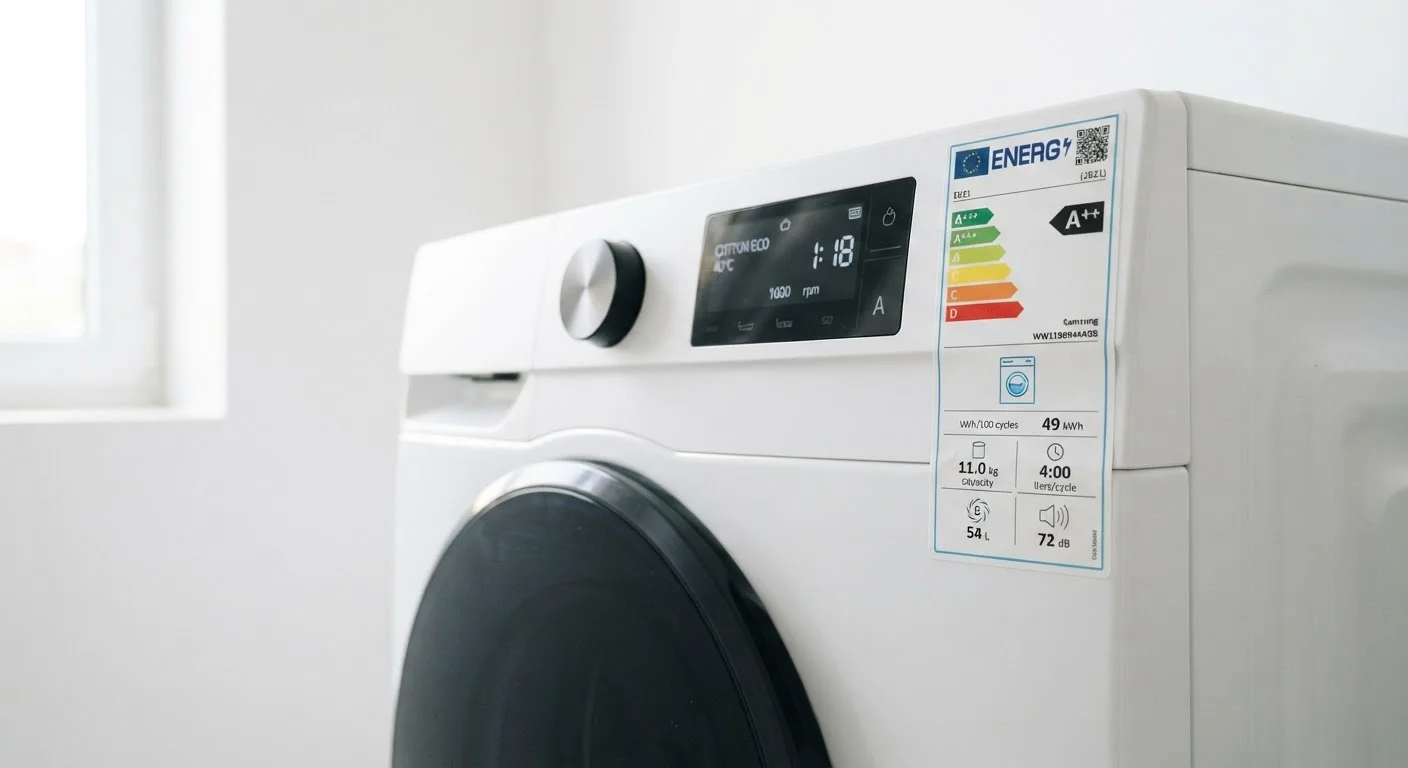
In the United States, the EnergyGuide label — a yellow and black tag administered by the Federal Trade Commission — is the most common standardized energy disclosure for appliances and many electronics. It displays estimated annual energy consumption in kWh and an estimated annual operating cost based on a national average electricity rate.
Separate from the EnergyGuide label, the ENERGY STAR program — a voluntary program run by the U.S. Environmental Protection Agency — certifies products that meet efficiency thresholds above the federal minimum. An ENERGY STAR mark means a product has been independently tested and verified to meet those criteria; it is not a self-reported manufacturer claim.
Compare Within the Same Category
Energy labels are most meaningful when comparing similar products — two 55-inch televisions, for example — rather than products of different sizes or types. A larger device will almost always use more energy in absolute terms, so size class context matters when reading annual kWh figures.
It is worth noting that efficiency thresholds change over time as technology improves, so a product certified several years ago may not meet current requirements even if its label is still visible. Checking the certification program's current specifications can clarify whether an older device meets today's standards.
Standby Power: The Hidden Consumption
Most plugged-in electronics draw a small but continuous amount of electricity even when switched off or idle. This is called standby power — sometimes referred to as idle load or, informally, "vampire draw."
Individual standby figures are often modest: a streaming device might draw 1–3 watts at rest, a game console in standby mode can draw considerably more. The concern arises from the sheer number of devices in a typical household running continuously around the clock.
Standby Power Adds Up Across Devices
A single device drawing 2 watts in standby may seem trivial, but a household with 20 or more always-plugged-in electronics can see that idle consumption become a noticeable share of the monthly electricity bill. Periodically unplugging devices you rarely use is a straightforward way to reduce this load.
Manufacturers are required to disclose standby power consumption in some product categories, and efficiency programs like ENERGY STAR set limits on how much standby draw a certified product may have. If you want to assess a specific device, the product's technical specification sheet — often available from the manufacturer — will list standby wattage separately from active-use wattage.
Smart power strips can cut power to devices that have entered standby, which is relevant if you have multiple devices clustered together. For context on what power strip specifications actually mean, see our power strip specifications guide.
How to Use This Information Practically
When evaluating any home electronics purchase, the most actionable approach is to compare annual kWh figures within the same product category. A device with a lower annual kWh estimate will, all else equal, cost less to run over its lifetime — and that difference compounds over years of use.
To convert a device's wattage into an estimated monthly cost yourself, multiply its wattage by your average daily hours of use, divide by 1,000 to get kWh, then multiply by your utility's rate per kWh. This gives you a rough operating cost that reflects your actual usage pattern rather than the label's assumptions.
Efficiency is also worth considering in the context of a device's expected lifespan. Our repair vs. replace guide covers how age and operating costs factor into that decision.
Finally, remember that efficiency ratings are comparison tools, not guarantees. Usage habits — screen brightness, connected devices, ventilation, and ambient temperature — all influence how a product actually performs in your home. Treat the label as a reliable baseline for comparing options, and adjust your expectations based on how you intend to use the device.
This article is for general informational and educational purposes only. Electricity costs, product specifications, and certification requirements vary and are subject to change. Consult your utility provider or a qualified energy professional for advice specific to your household.
Frequently Asked Questions
kWh stands for kilowatt-hour — the unit utilities use to bill electricity. One kWh is the energy used by a 1,000-watt device running for one hour. Annual kWh estimates on labels project how much electricity a device would consume over a full year under standardized test conditions.
Not necessarily. A device's efficiency depends on how much useful work it produces per watt consumed, not just its wattage rating. A lower-wattage device that runs longer to do the same job may use more energy overall than a higher-wattage device that finishes faster.
Standby power is the electricity a device draws when it is plugged in but not actively in use. Individual devices may draw only a watt or two, but across many devices running constantly, the cumulative effect can add up on a monthly electricity bill.
Certifications like ENERGY STAR indicate that a product meets specific efficiency thresholds set by a government or standards body. Products are tested against defined criteria, so the label signals verified performance rather than a manufacturer's self-reported claim.
The estimate is a useful benchmark for comparing similar products, but it is based on standardized usage assumptions and a national average electricity rate. Your actual cost will vary depending on how you use the device and what your local utility charges per kWh.
Different categories of electronics — televisions, refrigerators, washing machines, computers — are tested using category-specific methods. Ratings are most meaningful when comparing devices within the same category and size class, not across different product types.
The content on this site is for informational purposes only and is not a substitute for professional advice. Always consult a qualified professional for guidance specific to your situation.