

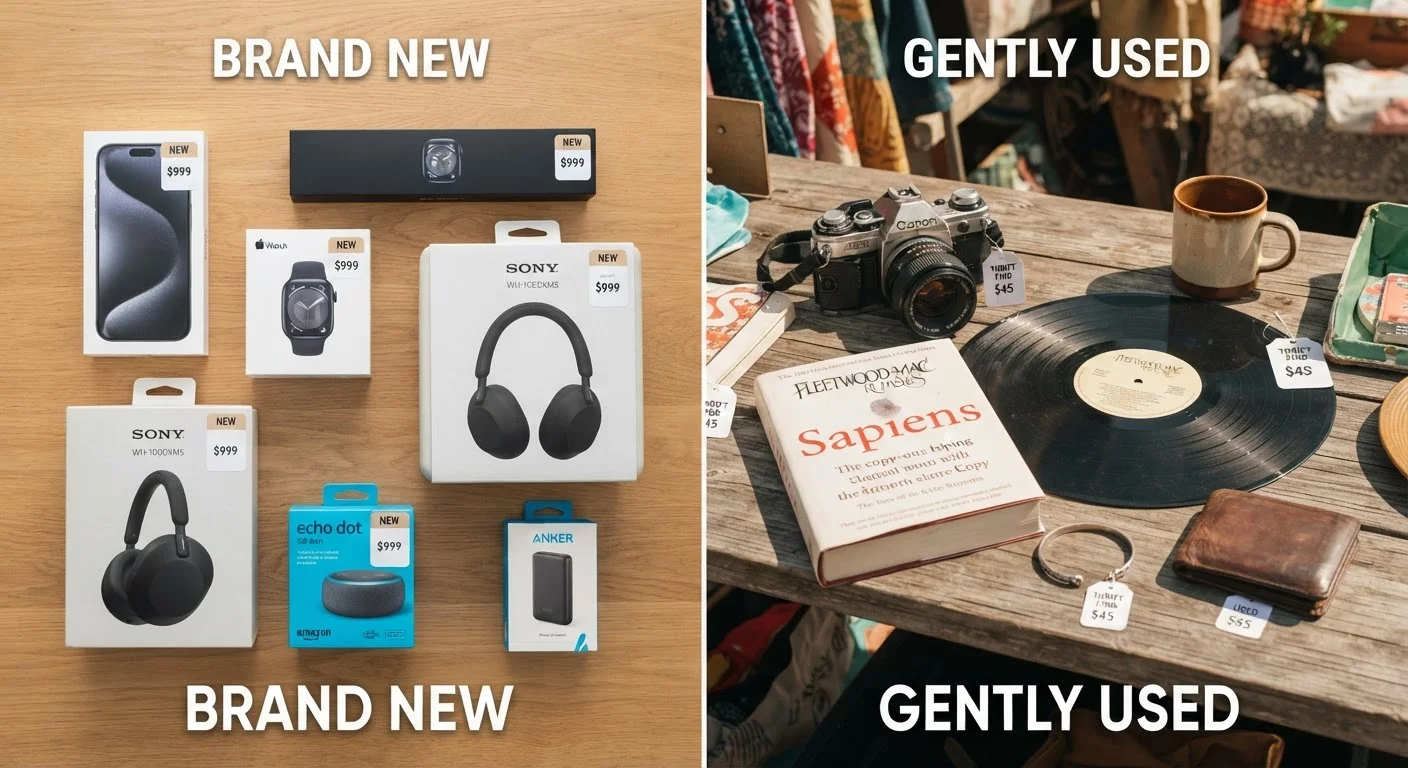
Option A
Buying Secondhand
The cost-conscious, sustainability-minded route.
Best for: Shoppers who prioritize savings and are willing to assess condition, provenance, and any hidden risks before committing.
Option B
Buying New
The predictable, warranty-backed standard.
Best for: Buyers who value reliability, full manufacturer support, and peace of mind—especially for safety-critical or long-term-use purchases.
The Core Question: Risk Tolerance by Category
Deciding between secondhand and new isn't a single universal answer—it's a category-by-category judgment call. The most useful filter is safety criticality. Any item designed to protect human life or health should be treated with extreme caution in the used market. Car seats, bicycle helmets, and smoke detectors all fall into this zone. Crash or impact history is invisible to the naked eye, and recall databases are difficult to cross-reference for items without documented serial numbers.
Beyond safety, consider product lifespan and degradation patterns. Lithium-ion batteries, for example, degrade with every charge cycle—a used laptop or power tool may show cosmetic mint condition while delivering 60% of its original battery runtime. Mechanical items like furniture, cast iron cookware, or hand tools, on the other hand, often perform identically after decades of use.
| Criterion | Buying Secondhand | Buying New |
|---|---|---|
| Purchase price | Typically lower | Full retail |
| Warranty coverage | Rarely included | Standard manufacturer warranty |
| Condition certainty | Requires inspection | Factory condition guaranteed |
| Safety-critical items | High risk—not recommended | Full recall and compliance visibility |
| Return options | Often none (private sellers) | Standard retailer return policy |
| Environmental impact | Extends product lifespan | New manufacturing footprint |
| Best item categories | Furniture, tools, books, clothing | Electronics, safety gear, appliances |
Total Cost of Ownership: Where the Math Gets Complicated
Sticker price is only part of the story. A used appliance priced at half of retail can quickly cost more if it fails within a year with no warranty protection. Factor in these variables before assuming secondhand is cheaper:
- Repair probability: Older appliances are more likely to need service, and parts for discontinued models may be scarce or expensive.
- Missing accessories: Used electronics often lack original cables, manuals, or mounting hardware—replacement costs add up.
- Return policy absence: Most private sellers offer no returns. A $300 used item that turns out to be defective is a $300 loss.
For major purchases involving private sellers—whether electronics, vehicles, or otherwise—it's worth understanding the broader landscape of buying from individuals versus retailers. Our guide on private seller vs. dealership trade-offs illustrates how this dynamic plays out in high-stakes transactions.
~$15B+
U.S. secondhand apparel market size
The secondhand apparel market alone has reached tens of billions in annual value, reflecting broad consumer adoption of resale across income levels.
30–50%
Typical used price discount vs. new
Used goods commonly sell at 30–50% below new retail, though the actual savings depend heavily on category, condition, and seller type.
1 in 4
Used electronics buyers reporting issues
Consumer surveys consistently find that a significant share of secondhand electronics buyers encounter undisclosed defects or performance problems post-purchase.
How to Evaluate Any Secondhand Purchase
Three pillars govern a sound secondhand decision: condition, provenance, and return options.
- Condition
- Inspect in person whenever possible. For electronics, test every function. For furniture, check joints and structural integrity. For clothing, examine seams and fabric under good light.
- Provenance
- Know where the item came from. A used item from a reputable reseller with grading standards (such as certified refurbishers) carries far less risk than a listing with no item history. Ask direct questions: How long was it owned? Why is it being sold? Has it been repaired?
- Return Options
- Even a short return window dramatically reduces your risk. Platforms that offer buyer protection or guarantee returns shift the risk equation in your favor.
If you're unsure whether a gadget even warrants a purchase at all—new or used—our pre-purchase thinking checklist helps you pressure-test the decision before spending anything.
Certified Refurbished Is Not the Same as 'Used'
Products labeled 'certified refurbished' by manufacturers or authorized refurbishers have typically been inspected, repaired to a functional standard, and re-tested. They often come with limited warranties. This is meaningfully different from an individual reselling a used item with no oversight. When buying electronics secondhand, this distinction is one of the most important factors in your decision.
Where Secondhand Wins—and Where It Doesn't
Strong secondhand candidates: Books, furniture, hand tools, musical instruments, bicycles (non-safety components), clothing, cookware, and sporting equipment where safety impact is low and condition is visually verifiable.
High-caution secondhand categories: Car seats, helmets, cribs, smoke and CO detectors, medical devices, and any product subject to active recalls. For context on how purchase channel affects risk in high-value categories, see the Buying & Selling Cars hub for guidance specific to vehicles.
Middle-ground categories (acceptable used with proper vetting): Smartphones and laptops from certified refurbishers with warranties, kitchen appliances with return windows, exercise equipment with mechanical simplicity. The key in the middle ground is always the presence of some buyer protection and the ability to test before committing.
The same logic that applies to tangible goods also shapes major decisions like housing. Exploring new construction vs. existing homes reveals how the new-vs-used calculus scales all the way up to real estate, where inspections, condition assessments, and provenance play equally critical roles.
The content on this site is for informational purposes only and is not a substitute for professional advice. Always consult a qualified professional for guidance specific to your situation.