

Why Skincare Prep Is the Foundation of Good Makeup
Most makeup frustrations - patchy foundation, creasing concealer, midday shine - trace back not to the makeup itself, but to the surface it was applied on. Skin is a living organ, and its texture, hydration level, and oil production on any given day will directly determine how products sit, blend, and wear.
Think of it this way: makeup is designed to interact with skin, not fight it. When skin is properly prepped - cleansed of overnight buildup, hydrated, and protected - makeup has a consistent, smooth surface to work with. Skip those steps, and even high-quality formulas can look uneven or break down within hours.
For a deeper look at how layering your skincare products in the right sequence affects absorption and effectiveness, see our guide to skincare layering. Understanding that logic makes every step below click into place.
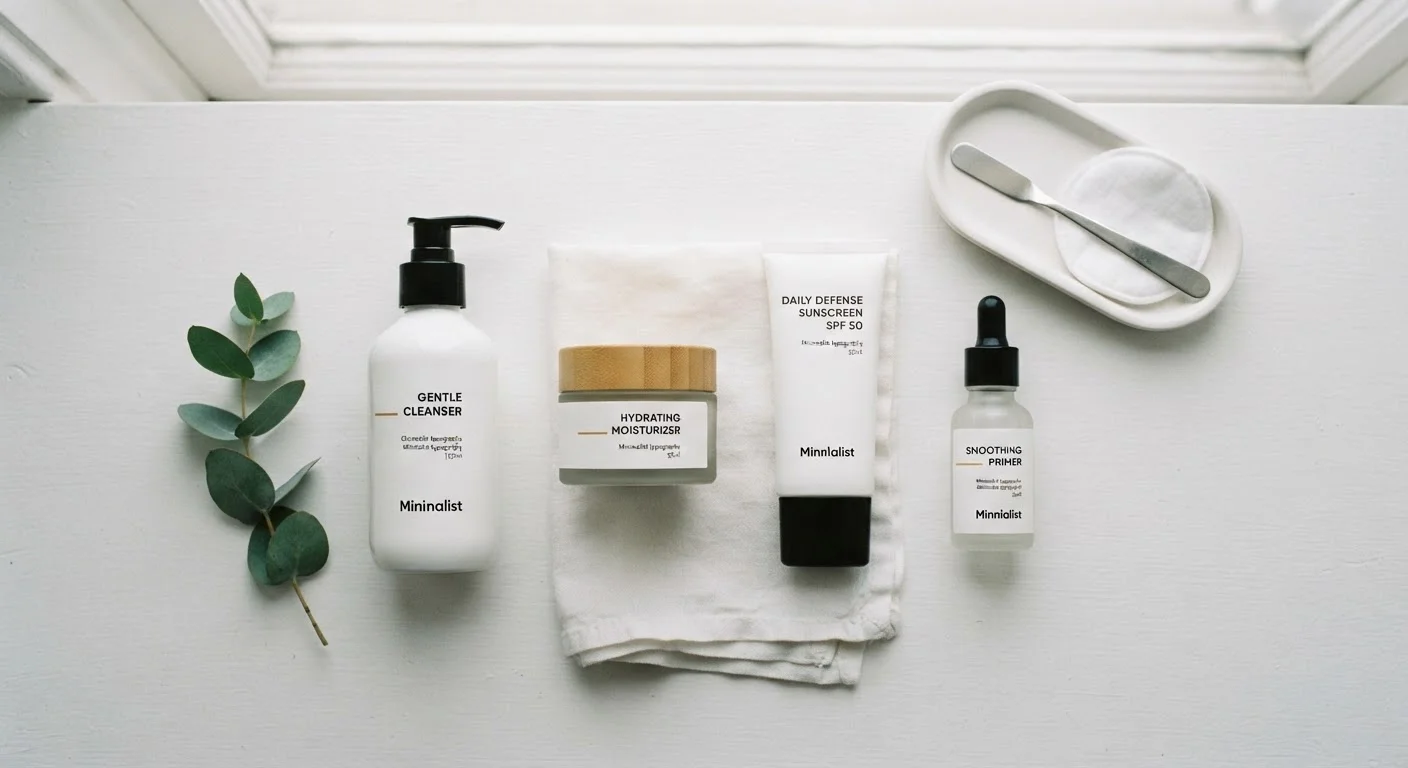
What you will need
The Prep Steps - In Order
Each step below builds on the last. Skipping or reordering them can reduce how well your makeup performs, regardless of which formulas you use.
Cleanse your skin
Start with a clean surface. Overnight sebum, residual product, and environmental buildup from the previous day can interfere with how skincare absorbs and how makeup adheres. Use a gentle cleanser appropriate for your skin type and rinse thoroughly with lukewarm - not hot - water.
Apply any treatment products
If your skincare routine includes serums, toners, or targeted treatments (such as vitamin C or niacinamide), apply them now - before moisturizer, while skin is still slightly damp. These products are formulated to penetrate more deeply, so they need to go on before heavier layers. Allow each to absorb for about 30 to 60 seconds before moving on.
For guidance on introducing new active ingredients without disrupting your prep routine, see this pre-launch checklist for new actives.
Moisturize
Moisturizer serves two jobs in a pre-makeup routine: it hydrates skin so it doesn't draw moisture from your foundation or concealer, and it creates a smoother surface that helps makeup blend more evenly. Apply a layer suited to your skin type and gently press it in rather than rubbing vigorously.
The four-step foundational routine breaks down what moisturizer actually does and how to choose the right one for your skin.
Apply sunscreen
For any daytime makeup routine, sunscreen comes after moisturizer and before primer or makeup. A broad-spectrum SPF 30 or higher is the general recommendation for daily protection. Apply it as its own layer and allow it to set - most dermatologists suggest waiting about two to three minutes before continuing.
Note that makeup products with SPF in their formulas (foundations, setting sprays) are generally not considered adequate substitutes for a dedicated sunscreen, because they're rarely applied in sufficient quantities to deliver the labeled protection.
Use primer (if appropriate for your skin and formula)
Primer is optional, not mandatory. It can help smooth texture, extend wear, or control shine depending on the formula. Silicone-based primers fill fine lines and create a soft-focus finish; water-based primers are better suited to oily skin or layering with water-based foundations. If your moisturizer is already providing adequate texture and hydration, you may not need primer at all.
Apply a thin, even layer to areas where you want additional smoothing or longevity - typically the T-zone or around the nose. Allow it to set for one to two minutes before applying foundation or base product.
Once your skin is fully prepped, the makeup formulas you choose should match what you've applied underneath. A heavy, occlusive moisturizer followed by a full-coverage liquid foundation may not sit as well as a lighter lotion paired with a skin-tint. For guidance on matching formulas to your prep, see how powder and liquid formulas behave across skin types.
Common Prep Mistakes Worth Knowing
Even readers who follow a skincare routine can run into avoidable issues when transitioning to makeup. A few of the most common:
- Applying makeup immediately after skincare: Products need time to absorb and bind to skin. Rushing this step - especially with sunscreen - often causes pilling or uneven blending.
- Skipping moisturizer on oily skin: Oily skin still needs hydration. Skipping moisturizer can trigger more oil production, not less, which actually shortens makeup wear.
- Treating SPF as optional: Sunscreen is a non-negotiable step for daytime wear. The science behind daily sunscreen use makes a strong case for why it belongs in every morning routine - under makeup included.
- Assuming primer fixes everything: Primer can refine pores or extend wear, but it is not a substitute for adequate moisture or a workaround for incompatible skincare and makeup formulas. Common makeup myths, including the idea that primer is always necessary, are worth examining before you invest.
Let Skincare Settle Before You Pick Up a Brush
A simple two-to-three-minute wait between finishing your skincare routine and starting your makeup can noticeably improve blending and reduce pilling. Use that time to brush your teeth, choose your outfit, or let your hair dry - any habit that builds in the pause consistently.
Once you have your prep routine dialed in, the next variable is how you actually apply your makeup. Your choice of application tool - brush, sponge, or fingers - meaningfully affects coverage, finish, and blending, and is worth exploring once your skin prep feels consistent.
This article provides general skincare and beauty information for educational purposes only. It is not a substitute for advice from a qualified dermatologist or healthcare provider. If you have a skin condition or concern, consult a licensed professional.
The content on this site is for informational purposes only and is not a substitute for professional advice. Always consult a qualified professional for guidance specific to your situation.