

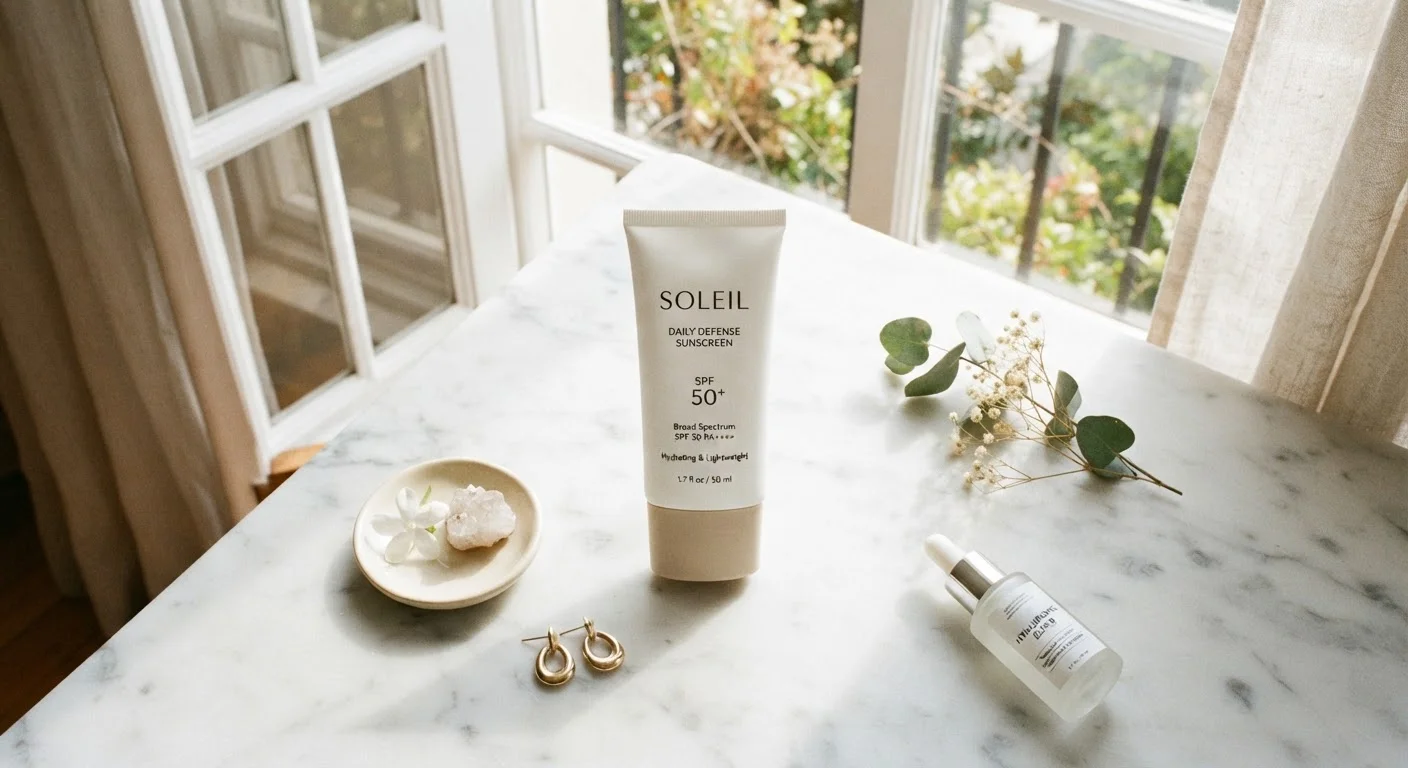
What UV Radiation Actually Does to Skin
Sunlight contains multiple types of radiation, but two matter most for skin health: UVA and UVB. UVB rays have shorter wavelengths and are the primary cause of sunburn. UVA rays penetrate more deeply into the dermis - the skin's structural layer - and are strongly associated with photoaging, the process by which repeated UV exposure leads to the breakdown of collagen and elastin over time. Both types are implicated in DNA damage to skin cells.
The cumulative effect is significant. Everyday exposure - walking to the car, sitting near a window, spending time outdoors - adds up over years. This is why sunscreen isn't positioned as a seasonal or occasional product by dermatologists, but as a consistent daily habit comparable to brushing teeth.
Broad-Spectrum vs. SPF Alone
An SPF number tells you only about UVB protection. UVA protection requires a broad-spectrum formulation - a distinction regulated by the FDA in the U.S. When choosing a sunscreen, confirm the label says 'broad-spectrum' in addition to the SPF rating. Both designations together give you more complete coverage against the UV spectrum.
For readers building a full routine, our guide on building a four-step skincare routine explains where SPF fits alongside cleansing and moisturizing.
Decoding SPF: What the Numbers Mean
The SPF number on a sunscreen label tells you how much UVB radiation is filtered relative to unprotected skin. The math is straightforward but often misread:
- SPF 15 filters approximately 93% of UVB rays
- SPF 30 filters approximately 97% of UVB rays
- SPF 50 filters approximately 98% of UVB rays
The difference between SPF 30 and SPF 50 is smaller than most people assume - about one percentage point. However, that gap becomes more relevant for people with very fair skin, those spending extended time outdoors, or individuals with a history of skin concerns. No sunscreen blocks 100% of UV radiation.
Critically, SPF measures only UVB protection. To address UVA radiation, look for the phrase broad-spectrum on the label. In the U.S., this term is FDA-regulated, meaning products labeled as broad-spectrum must pass a standardized test before making that claim.
~97%
UVB rays filtered by SPF 30
SPF ratings are determined under standardized lab conditions using 2 mg/cm² of product, per FDA testing methodology.
Up to 80%
UV rays that penetrate cloud cover
The World Health Organization notes that cloudy conditions do not eliminate UV exposure, making daily sunscreen relevant year-round.
25-50%
Typical real-world sunscreen application vs. recommended amount
Research published in dermatology literature consistently finds that most people apply significantly less sunscreen than the amount used to establish SPF ratings.
Why Application Habits Determine Real-World Effectiveness
SPF ratings are established in laboratory settings using a specific amount of product: 2 milligrams per square centimeter of skin. In practice, most people apply far less - often 25-50% of the recommended amount - which means the protection achieved is meaningfully lower than the labeled SPF.
Practical habits that affect real-world protection include:
- Amount applied: For the face alone, this typically equals about a quarter teaspoon or a nickel-sized amount. For the full body, most guidelines suggest roughly one ounce (a shot glass worth).
- Reapplication: Sunscreen degrades with UV exposure and is removed by sweating and swimming. Reapplication every two hours during active outdoor time is the standard recommendation.
- Coverage: Commonly missed areas include the ears, back of the neck, tops of the feet, and the back of the hands.
These factors are why dermatologists focus not just on which sunscreen someone uses, but on how they use it. Understanding the difference between physical and chemical sunscreens can also help readers choose a formulation they're more likely to apply consistently.
Make Reapplication More Realistic
If reapplying sunscreen over makeup feels impractical, mineral powder sunscreens can be dusted on top of a finished look. While they shouldn't replace a morning liquid application, they help maintain coverage during longer outdoor days without disrupting makeup. Check the label to confirm they carry a broad-spectrum designation.
Sunscreen Within a Broader Skincare Routine
Sunscreen is most effective when it's the final step before makeup or going outdoors. It should be applied after moisturizer and serums, which need time to absorb. If you use a moisturizer with SPF, be aware that the coverage may be thinner than a dedicated product - though it's still better than skipping protection entirely.
For those who wear makeup, SPF-containing foundation or powder can provide supplemental coverage, but should not replace a dedicated sunscreen layer. Our article on skincare steps that make makeup work better covers how to layer SPF effectively with primer and foundation.
UV exposure doesn't stay constant across the year, and your habits may need to adapt accordingly. Seasonal skincare adjustments - including SPF strategy - are worth understanding as UV index shifts with the months.
This article is for general informational and educational purposes only and does not constitute medical or dermatological advice. Consult a qualified dermatologist or healthcare provider for guidance specific to your skin type, concerns, or conditions.
Frequently Asked Questions
Yes. Up to 80% of UV rays can pass through clouds, and UVA rays remain relatively constant year-round regardless of temperature or cloud cover. Applying sunscreen daily - regardless of season or weather - is the approach consistently supported by dermatology research.
Most dermatology organizations, including the American Academy of Dermatology, recommend using a broad-spectrum SPF 30 or higher for daily use. SPF 30 blocks roughly 97% of UVB rays under ideal application conditions. For extended outdoor exposure, SPF 50 offers a modest additional margin.
Cosmetics with SPF provide some protection, but most people apply far less than the amount required to achieve the labeled SPF rating. Using a dedicated sunscreen beneath makeup is the more reliable approach for meaningful daily protection.
Reapplication every two hours is the standard guidance when spending time outdoors, and immediately after swimming or heavy sweating. For mostly indoor days with brief sun exposure, a morning application is typically sufficient.
Studies suggest that real-world sunscreen use - where coverage is rarely perfect - does not significantly reduce vitamin D synthesis in most people. This is a nuanced topic, and anyone with concerns about vitamin D levels should speak with a healthcare provider.
There are formulations designed for a wide range of skin types, including sensitive and acne-prone skin. Mineral (physical) sunscreens containing zinc oxide or titanium dioxide are generally considered well-tolerated for sensitive skin. A dermatologist can help identify the right formulation for your specific needs.
The content on this site is for informational purposes only and is not a substitute for professional advice. Always consult a qualified professional for guidance specific to your situation.