

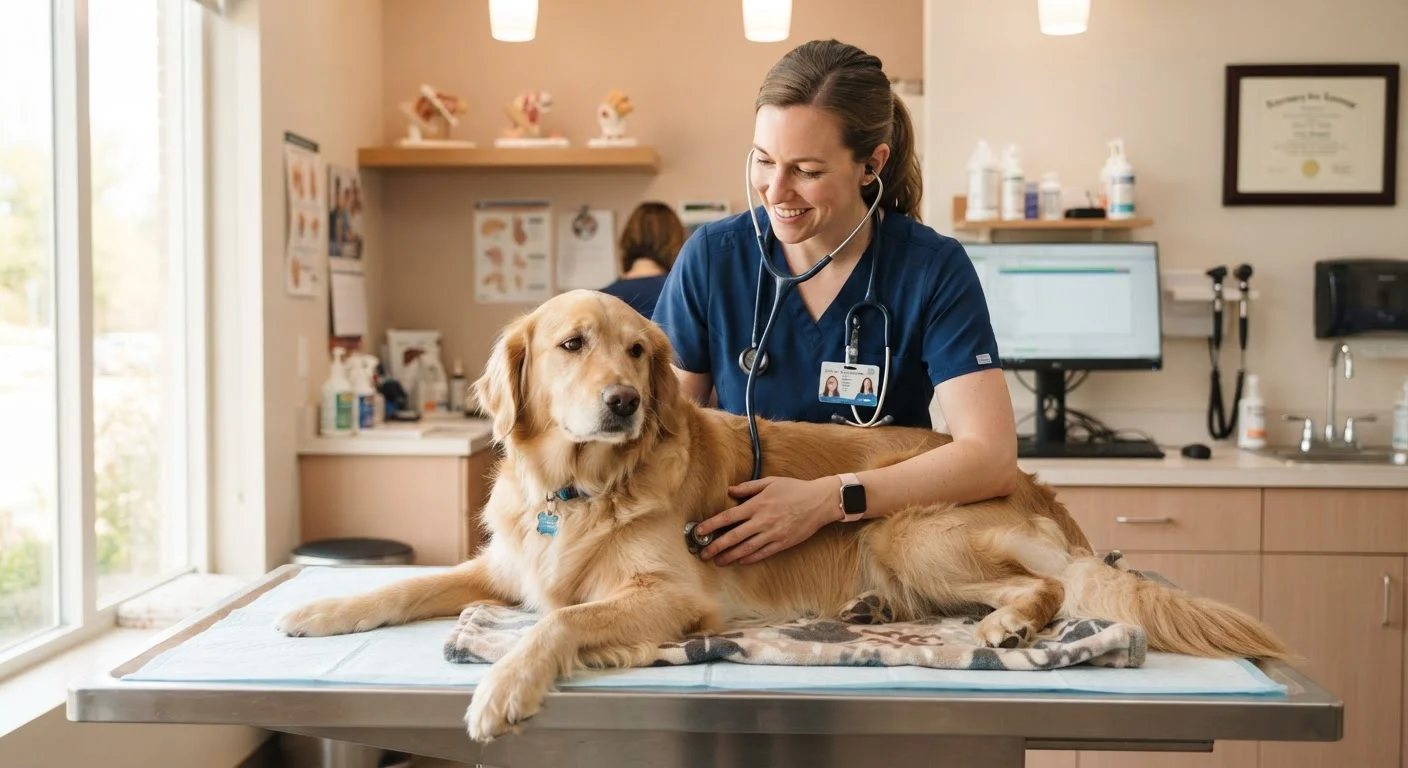
The Exam from Start to Finish
When you walk into the exam room, the visit begins before the stethoscope comes out. Your vet or a technician will ask about your pet's diet, activity level, bathroom habits, and any behavioral changes you've noticed. These questions matter — behavior and appetite shifts are often the first clue that something is off.
The physical exam itself is systematic. Your veterinarian works through each body system:
- Eyes and ears: Checked for discharge, redness, cloudiness, or signs of infection.
- Mouth and teeth: Tartar buildup, gum inflammation, and tooth fractures are assessed. Dental disease is one of the most common findings in adult pets — learn more in our guide on why dental care matters for pets.
- Skin and coat: Lumps, hair loss, parasites, and coat quality indicate both skin health and broader nutritional status.
- Heart and lungs: Listening for murmurs, irregular rhythms, or abnormal breath sounds.
- Abdomen: Palpation helps detect organ enlargement, masses, or tenderness.
- Lymph nodes and joints: Swollen nodes or stiff, painful joints can point to infection, inflammation, or early arthritis.
Weight is recorded at every visit. Gradual weight gain or loss is easy to miss at home but clearly visible when tracked against a health record over time.
Bring a List of Questions
Before your pet's appointment, jot down any changes you've noticed — even minor ones like increased water intake, occasional limping, or shifts in sleep habits. Vets can only investigate what they know about, and your observations between visits are genuinely valuable clinical information. A short written list ensures you don't forget anything in the moment.
Preventive Care Handled at the Same Visit
Annual exams are also when your vet updates or confirms preventive care. This typically includes reviewing your pet's vaccination status and administering any boosters that are due. For a detailed breakdown of which vaccines apply and when, see our overview of pet vaccination schedules for dogs and cats.
Parasite prevention is another routine component. Your vet will check for fleas, ticks, ear mites, and intestinal parasites — often using a fecal sample you bring from home. They'll also review whether your pet's current heartworm, flea, and tick prevention is appropriate for your region and lifestyle.
70%
Adult pets with some form of dental disease by age 3
According to the American Veterinary Medical Association, dental disease is one of the most prevalent conditions identified during routine wellness exams in adult dogs and cats.
2x/year
Recommended exam frequency for senior pets
Veterinary guidelines generally recommend twice-yearly exams for pets over seven years old, reflecting how quickly age-related health changes can develop in animals.
For pets entering their senior years, your vet may recommend baseline bloodwork to establish normal values for kidney and liver function, thyroid levels, and blood cell counts. Catching shifts in these numbers early gives you more options for management. You can read more about building consistent preventive habits year-round in our guide to year-round preventive care for pets.
Why Skipping Quietly Costs More Than It Saves
It's easy to delay a vet visit when your pet appears comfortable and energetic. But animals — especially cats — are instinctively good at concealing discomfort. By the time a condition produces obvious signs, it has often been developing for months.
Consistent annual exams create a documented health baseline. A vet who sees your pet every year can notice that a once-firm abdomen now feels different, or that a heart murmur that wasn't there last year has appeared. Without that history, those comparisons aren't possible.
Pets Age Faster Than We Realize
A single calendar year represents a much larger portion of a pet's lifespan than it does a human's. A seven-year-old dog is roughly equivalent to a middle-aged adult, and the health changes that come with that life stage can develop quickly. This is why veterinary guidelines often shift to biannual exams as pets cross into their senior years — more frequent monitoring simply reflects the pace of biological change.
There's also a practical cost dimension. Conditions caught in early stages — a small mass, early kidney changes, the beginnings of dental disease — are typically less expensive to manage than advanced disease requiring emergency treatment or surgery. Preventive care is not just a health investment; it's generally a more economical approach over a pet's lifetime.
Annual visits fit into the broader picture of responsible ownership covered in our complete everyday pet care overview. Between visits, maintaining at-home routines — including safe home grooming practices — helps you notice changes and keeps your pet comfortable year-round.
This article is for general informational purposes only and does not constitute veterinary medical advice. Always consult a licensed veterinarian for guidance specific to your pet's health and needs.
Frequently Asked Questions
Your vet performs a full physical assessment covering eyes, ears, mouth and teeth, skin and coat, heart, lungs, abdomen, lymph nodes, and joints. They also review your pet's weight, behavior history, and any concerns you've noticed at home. Vaccines and parasite prevention are commonly updated at the same visit.
Most healthy adult dogs and cats need a wellness exam once a year. Puppies and kittens require more frequent visits in their first year for vaccinations and development checks. Pets over seven years old often benefit from exams every six months because age-related conditions can develop quickly.
Skipping is risky precisely because pets are adept at masking discomfort and early illness. Many conditions — including dental disease, kidney changes, and early tumors — are detectable on exam before the pet shows obvious symptoms. Consistent yearly visits create a health baseline that makes abnormalities easier to spot.
Basic bloodwork is not always included automatically but is often recommended, especially for middle-aged and senior pets. A complete blood count (CBC) and chemistry panel can reveal organ function issues, anemia, and other internal changes invisible to the eye. Ask your vet whether bloodwork is appropriate for your pet's age and history.
Bring any previous vaccination or medical records if you're visiting a new clinic, a fresh stool sample for parasite testing, and a list of any behavioral or physical changes you've observed. Note any supplements or medications your pet currently takes. Coming prepared helps your vet make the most of the appointment.
The content on this site is for informational purposes only and is not a substitute for professional advice. Always consult a qualified professional for guidance specific to your situation.