

Our Verdict
Bulk buying is a genuinely effective strategy for reducing per-unit costs on stable, high-consumption household staples. The savings are real — but only when you account for membership fees, storage capacity, and the realistic likelihood that you'll use every unit before it expires or becomes obsolete. Approached with clear criteria rather than impulse, warehouse shopping can trim meaningful dollars from an annual household budget.
Households with storage space, consistent consumption patterns, and the discipline to evaluate unit prices before adding oversized packages to the cart.
The Core Logic of Bulk Purchasing
The premise is straightforward: buy more units at once, pay less per unit. Warehouse clubs and big-box retailers pass along volume discounts because larger package sizes reduce packaging, handling, and restocking costs. The savings get shared — in theory — with the shopper.
In practice, that per-unit discount only translates to real savings when several conditions align: you have space to store the goods, you'll use them before they expire or degrade, and the upfront cost doesn't strain your cash flow in ways that create other expenses. Understanding those conditions before you load the cart is the difference between a smart stock-up and an expensive mistake.
Unit price math is the foundational skill here. Warehouse shelf labels don't always make the per-unit figure obvious, so calculating cost-per-ounce or cost-per-count yourself is essential before assuming a bulk price is actually lower.
Lower cost per unit on household staples
Buying paper products, cleaning supplies, and pantry staples in volume typically yields a 10–30% reduction in per-unit cost compared to standard retail sizes — a measurable saving over a full year.
Fewer shopping trips saves time and fuel
Stocking up reduces the frequency of routine store visits, which cuts transportation costs and the incidental impulse purchases that tend to occur on each trip.
Protects against short-term price increases
Stocking a supply of frequently used goods at today's price provides a buffer if retail prices rise in the near term, particularly for commodity-linked items like cooking oil or cleaning products.
Reduces packaging waste over time
Larger containers typically use less total packaging material per unit of product, which can meaningfully reduce household waste for shoppers who prioritize environmental considerations.
Where Bulk Buying Erodes Rather Than Builds Savings
The warehouse model has a built-in psychological pull: large quantities at a lower per-unit price feel like responsible spending. But several categories routinely fail the savings test under closer scrutiny.
Perishables are the most obvious trap — a 5-pound container of spinach is only a value if your household genuinely consumes that volume before it spoils. Waste eliminates any discount. The same logic applies to refrigerated and frozen items where storage space is finite.
Bulk purchases of items you've never tried before carry a different risk: you're committing significant money to a product before establishing whether you'll actually use it consistently. This is especially true for specialty food items, cleaning products with strong scents, or personal care products where skin compatibility varies.
Seasonally rotating or trend-sensitive products — think specific snack flavors, tech accessories, or fashion-adjacent items — can go from must-have to forgotten before a bulk supply runs out. Overspending patterns often feel like saving in the moment.
Upfront cost strains short-term cash flow
Large package sizes require bigger single transactions, which can disrupt monthly budgets even when the per-unit math is favorable. This tradeoff is real and shouldn't be dismissed as purely theoretical.
Spoilage risk eliminates savings on perishables
Any amount of food, cleaning product, or personal care item discarded before use converts a discount into a net loss. Realistic consumption estimates are essential before committing to large quantities.
Membership fees must be offset by actual savings
Annual fees ranging from roughly $50 to over $100 represent a fixed cost that requires deliberate buying habits to recover — shoppers who visit infrequently may spend more than they save.
Storage requirements exclude many households
Apartments, smaller homes, or rentals without adequate pantry or garage space make safe, quality-preserving bulk storage impractical, negating the price advantage.
Risk of buying what you won't consistently use
Bulk quantities of untested or trend-sensitive products often go partially unused. Preferences change, products disappoint, and large supplies of the wrong item become a sunk cost.
The Hidden Costs That Change the Calculation
Two costs that shoppers frequently underweight: membership fees and storage. Annual warehouse club memberships typically run between $50 and $130. That fee needs to be recovered through actual savings before the first dollar of net benefit appears — a detail worth calculating at least annually.
~$65–$130
Typical annual warehouse club membership fee range
Major warehouse club operators publish their membership tiers publicly; fees must be factored into any genuine savings calculation.
30–40%
Estimated food waste rate in U.S. households
The USDA estimates that American households waste roughly 30–40% of the food supply, a figure that directly undermines savings on perishable bulk purchases.
Storage has a subtler cost. Bulk goods require physical space, and in smaller homes or apartments, that space may not exist. Improvised storage in damp garages or unventilated closets can degrade products, introducing spoilage or quality loss that erases the discount entirely.
There's also a cash flow dimension worth noting. Paying $80 for a bulk paper towel supply today versus $12 monthly over several months is a real financial difference for households managing tight budgets. Budgeting fundamentals matter here: a lower unit price doesn't help if a large upfront outlay disrupts your monthly spending plan.
Bulk Buying Is a Strategy, Not a Default
Warehouse clubs are designed to encourage high-volume purchases through store layout, large package presentation, and sample stations that build appetite and enthusiasm. That environment can make it easy to justify purchases that don't actually fit your household's realistic usage. Treating bulk buying as a deliberate, criteria-based strategy rather than a reflexive habit is what keeps it working in your favor. Retail pricing tactics are worth understanding before your next warehouse visit.
Building a Reliable Bulk-Buying Framework
The most practical approach is a short mental checklist applied before any large-format purchase. Ask: Is this a product I use consistently and have used for at least several months? Will it keep — either shelf-stable or storable — long enough to be used? Do I have space that won't compromise quality? And is the per-unit cost genuinely lower, not just the package size larger?
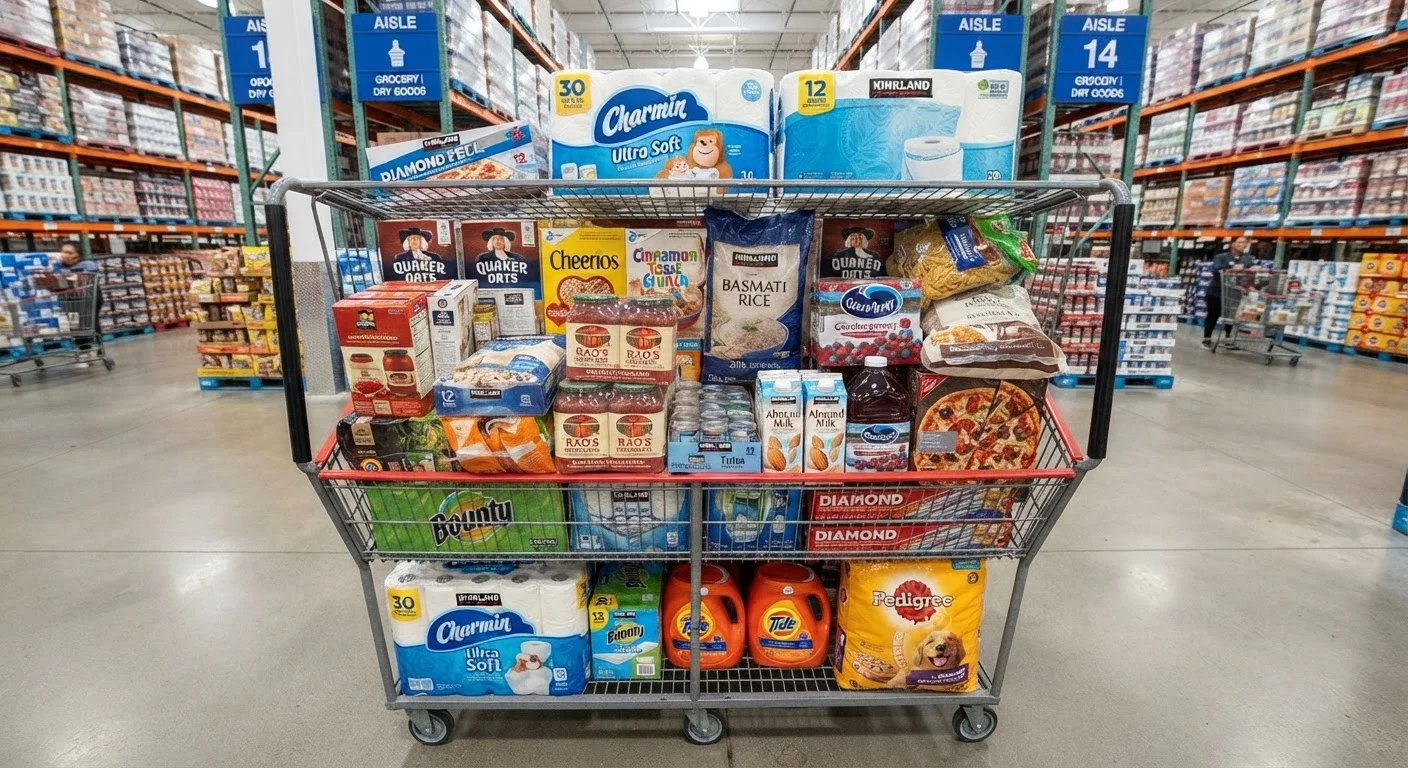
Items that reliably clear that bar include toilet paper, paper towels, dish soap, laundry detergent, canned goods, dry pasta, rice, and common over-the-counter medications with long expiration windows. These categories have stable demand and no quality degradation risk in normal home storage.
Items that consistently fail: fresh produce, bread, dairy, specialty sauces you haven't tried, and anything with a meaningful chance of going unused due to changing preferences or seasons. Being honest about household consumption patterns — rather than aspirational ones — is what separates a genuinely useful bulk purchase from an expensive experiment.
For a broader view of how purchasing decisions fit into long-term financial health, short-term savings strategies offer useful context on where everyday spending decisions connect to bigger financial goals.
The content on this site is for informational purposes only and is not a substitute for professional advice. Always consult a qualified professional for guidance specific to your situation.