

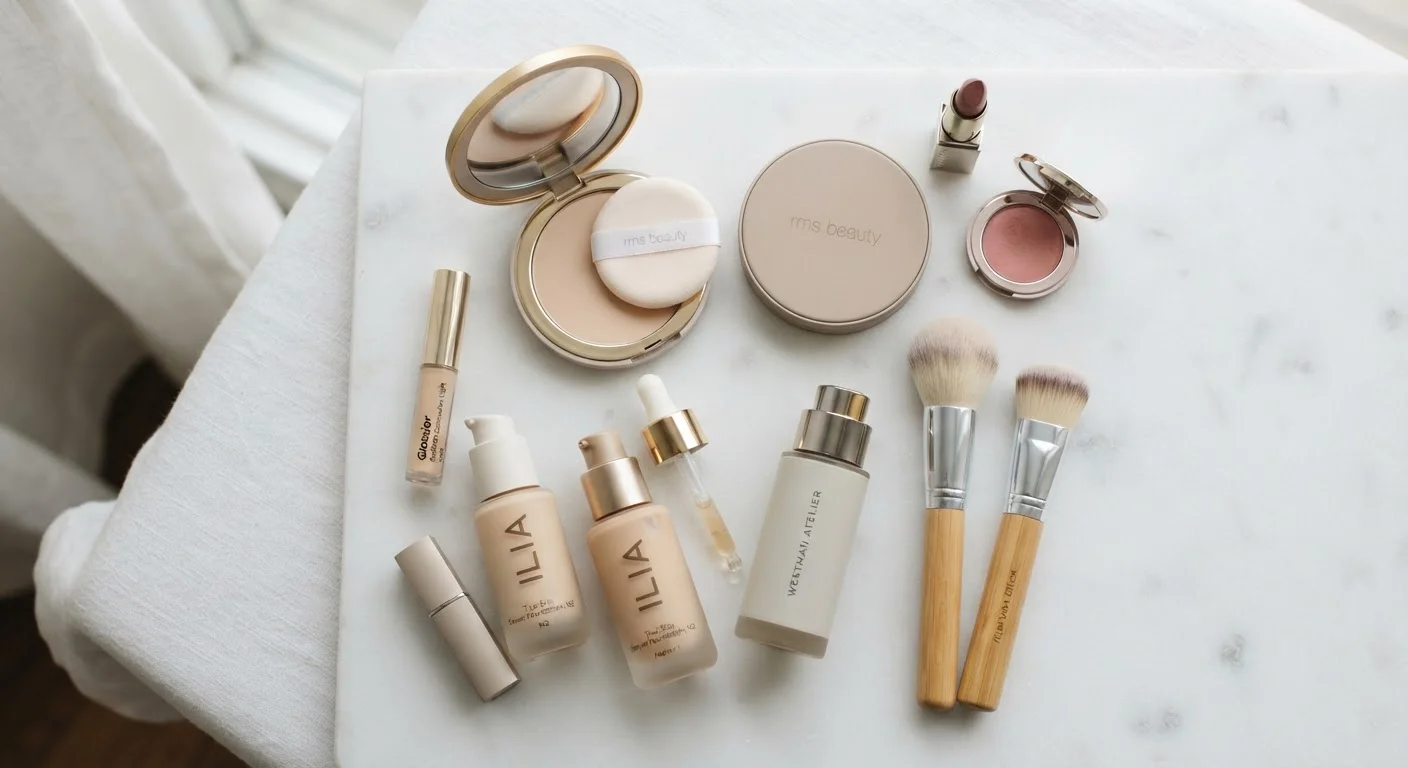
Option A
Powder Formulas
The lightweight, oil-absorbing classic.
Best for: Best for oily or combination skin types looking for a matte finish and longer-lasting wear without adding moisture.
Option B
Liquid Formulas
The buildable, skin-blending modern staple.
Best for: Best for dry, mature, or uneven skin types that benefit from hydration, seamless blending, and flexible coverage.
Why Formula Type Matters More Than Shade
Most makeup beginners focus almost entirely on finding the right shade match - and while color accuracy matters, the formula you choose will have a larger impact on how your makeup looks and lasts. Powder and liquid products behave differently at the chemical level, interact differently with skin's natural oils and moisture, and suit different skin types for distinct reasons.
Understanding these differences does not require chemistry knowledge. What it does require is a basic sense of your own skin type: whether it tends toward oiliness, dryness, or a mix of the two. That single piece of self-knowledge is the most useful guide to choosing between formats. For a broader look at how base product categories compare, see our guide to foundations, tinted moisturizers, and BB creams.
| Criterion | Powder Formulas | Liquid Formulas |
|---|---|---|
| Best skin type | Oily, combination | Dry, mature, normal |
| Finish | Matte to satin | Dewy to satin to matte |
| Hydration | None; absorbs moisture | Adds moisture or emollients |
| Fine line behavior | Can settle into lines | Tends to smooth over lines |
| Blending window | Sets quickly, less forgiving | Stays workable longer |
| Layering ease | Easy to build lightly | Requires blending between layers |
| Longevity on oily skin | Strong; absorbs sebum | May need powder to set |
How Powder Formulas Behave on Skin
Powder makeup - whether pressed, loose, or baked - works by sitting on top of the skin's surface and absorbing moisture and oil from that surface. This is what makes powders effective for oily or combination skin: they actively reduce shine rather than adding more product to it.
Powder also provides a physical barrier effect that can help set liquid or cream products underneath, extending their wear. However, because powders do not contain significant water or emollient content, they offer no hydrating benefit. On dry or dehydrated skin, powder can emphasize texture, flakiness, or fine lines by catching in the skin's uneven surface rather than blending smoothly over it.
~65%
Adults with combination or oily skin
Dermatology research consistently finds that oily and combination skin types represent the majority of adults, making oil-controlling formulas widely relevant.
2-4 hrs
Typical powder wear before touch-up on oily skin
Wear time varies significantly based on climate, skin prep, and activity level; this range reflects commonly reported real-world experience.
Application matters here too. Heavy or repeated powder application tends to look cakey on most skin types. A light, buffing motion with a fluffy brush generally produces the most natural result. Your choice of applicator tool also affects how powder distributes across the skin.
How Liquid Formulas Behave on Skin
Liquid formulas - including liquid foundations, blushes, highlighters, and concealers - contain water, binding agents, and often skin-conditioning ingredients. This composition means they integrate more closely with the skin's surface, producing a more natural-looking result on many skin types.
For dry or mature skin, liquid formulas are generally more comfortable to wear because they add a thin layer of moisture rather than removing it. They also tend to move with the skin rather than sitting rigidly on top, which helps minimize the appearance of fine lines in a way that powder often cannot.
The trade-off is that liquid formulas require more careful blending before they set and may not last as long on oily skin without a setting product applied over the top. The skincare steps you follow before applying any liquid formula also directly affect the final result - prep steps like moisturizer and primer shape how liquid products adhere and wear.
Liquid Formulas and Acne-Prone Skin
Not all liquid formulas are equal when it comes to acne-prone skin. Some contain heavier emollients or occlusive ingredients that can clog pores and contribute to breakouts. Look for products labeled 'non-comedogenic,' which indicates the formulation has been designed to minimize pore-blocking. If you have a skin condition like acne or rosacea, a dermatologist can offer personalized guidance on which formula types are appropriate for your skin.
Matching Format to Skin Type: A Practical Summary
There is no single correct formula, and many people benefit from mixing formats strategically. Someone with combination skin might use a liquid foundation for overall coverage and a translucent setting powder only over the T-zone. Someone with dry skin might skip powder entirely and use liquid products from foundation through to blush and highlight.
If you have ever been frustrated that your makeup doesn't look the way you expect, it is worth checking whether the formula format is working against your skin type rather than with it. Makeup labels carry a significant amount of useful information about finish and formula behavior - learning to decode that language helps enormously. Our guide to reading makeup labels explains common terms like matte, dewy, and buildable in plain language.
This article is for general informational purposes only. Individual skin responses vary, and anyone with a skin condition or sensitivity should consult a qualified dermatologist before changing their makeup routine.
The content on this site is for informational purposes only and is not a substitute for professional advice. Always consult a qualified professional for guidance specific to your situation.