

Start here
Why Less Is More When You're Starting Out
Next
The Core Products That Actually Matter
Then
Choosing the Right Tools
Dig deeper
Understanding Finishes and Formulas
When you're ready
How to Build Your Routine Over Time
Why Less Is More When You're Starting Out
Walking into a beauty section for the first time can feel like trying to read a map in a foreign language. Dozens of product categories, hundreds of shade options, and a steady stream of online recommendations - most of which assume you already know what a setting spray is for. The good news: you don't need most of it, at least not yet.
A genuinely useful starter kit contains four to five products, full stop. Beginning with fewer items means you actually learn what each one does, how it feels on your skin, and whether it's working. That practical experience is more valuable than owning twelve products you can't quite place. It also helps you avoid a common pitfall: spending on products that duplicate each other because the packaging looked different enough.
It's also worth noting that makeup performs differently depending on what's underneath it. Skin prep - moisturizer, SPF, and sometimes primer - directly affects how products apply and last. Getting that foundation right matters more than adding a sixth product to your bag.
Start With What You'll Actually Use
When choosing starter products, prioritize categories you already reach for or genuinely want to learn. If you never wear lip color, there's no urgency to add it to your kit. A five-product kit used consistently teaches you far more than fifteen products used occasionally.
The Core Products That Actually Matter
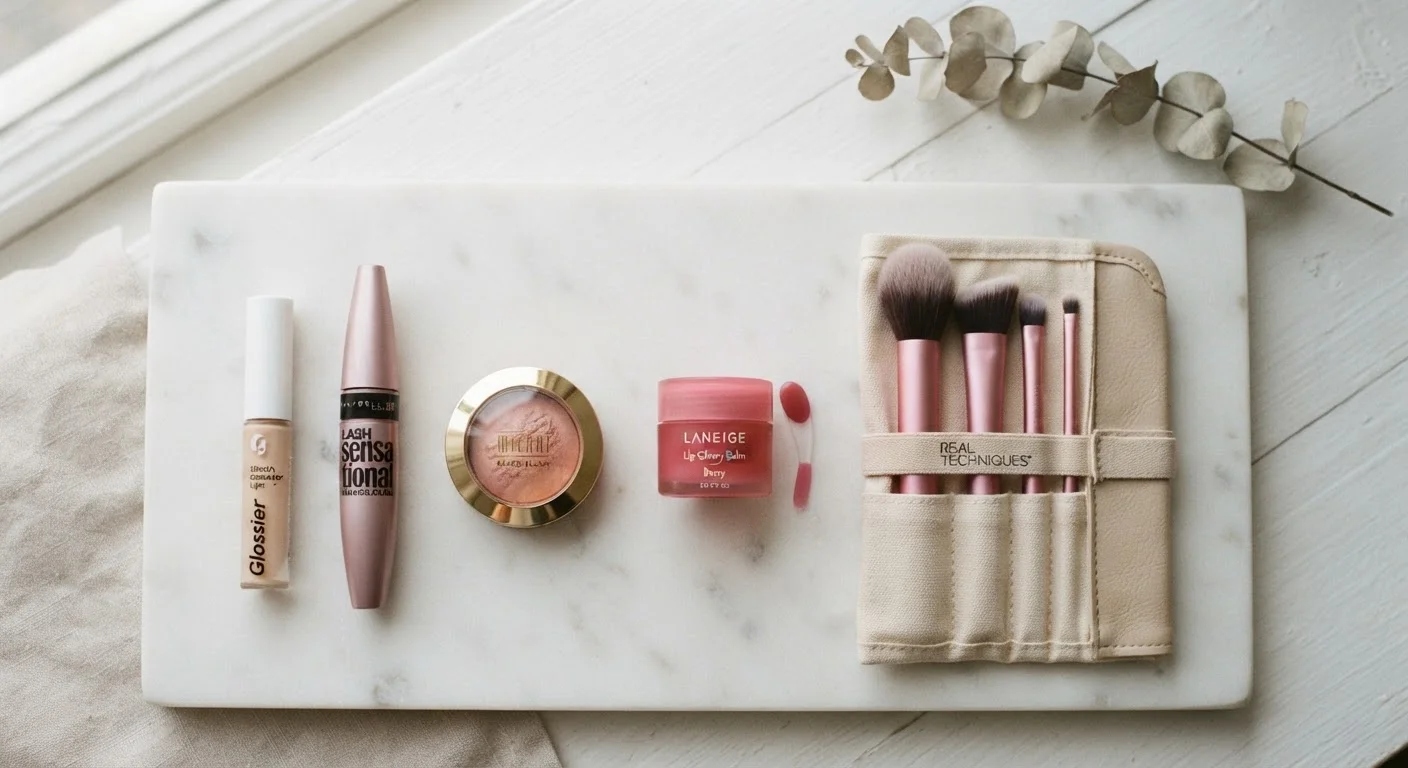
These five categories cover nearly every beginner's needs without overlap:
- Concealer or tinted moisturizer: Choose one, not both, to start. Concealer targets specific areas - under-eye circles, blemishes - while tinted moisturizer provides sheer, all-over coverage. Both are forgiving for beginners because they blend easily and don't require precision.
- Mascara: A single coat of mascara is one of the fastest ways to make eyes look more defined. It requires minimal technique and makes a visible difference on most people. When you're ready to expand, liner and shadow build naturally from here.
- Blush: Blush restores color and warmth to the face that foundation or concealer can mute. Cream blush is generally easier to blend for beginners than powder; a small amount applied to the apples of the cheeks and blended upward is a reliable starting point.
- A brow product: Filling in brows - even lightly - frames the face and pulls a look together quickly. A tinted brow gel or a fine-tipped pencil both work well with minimal practice.
- Lip color or tinted balm: A sheer tinted lip balm adds color while keeping moisture, making it the lowest-commitment option. A cream lipstick is a step up in pigment with still-forgiving blendability.
Coverage
How much a product conceals or obscures the skin beneath it. Ranges from sheer (skin shows through) to full (skin is largely hidden).
Finish
The surface appearance a product creates once applied - matte (no shine), satin (subtle glow), or dewy (luminous and light-reflecting).
Buildable
A product you can layer to increase coverage or intensity rather than being locked into one level of opacity.
Setting
The process of using a powder or spray to help makeup stay in place longer and reduce transfer.
Tinted moisturizer
A lightweight moisturizer with a small amount of pigment that evens out skin tone while hydrating - coverage is minimal and the finish is natural.
Primer
A base product applied before foundation or other makeup to smooth texture, extend wear, or create better adhesion. Not essential for everyone.
Choosing the Right Tools
The applicator you use changes the result more than most beginners expect. Fingers warm product and press it into skin, which works especially well for cream formulas. A damp sponge diffuses product and mimics a natural finish. Brushes offer more control and can build coverage precisely where you want it.
You don't need a full brush set to start. A fluffy face brush, a flat or stippling foundation brush, and a small blending brush for eyes covers most situations. Understanding what each applicator does well - and where it falls short - helps you get consistent results.
Clean tools also matter. Bacteria and product buildup on brushes and sponges can contribute to breakouts and uneven application. A gentle brush cleanser or mild soap used weekly is sufficient for most beginners.
Don't Share Applicators with Others
Sharing sponges, brushes, or any direct-contact applicator - including mascara wands - can transfer bacteria and increase the risk of eye and skin infections. Keep your tools personal, and replace mascara every few months to reduce bacterial buildup.
Understanding Finishes and Formulas
Makeup packaging uses a consistent vocabulary once you learn to read it. Matte means no shine - good for oilier skin or areas where you want to reduce reflection. Dewy means luminous and reflects light - generally flattering on drier skin. Satin sits between the two.
Coverage describes how much the product conceals. Sheer coverage lets skin show through; full coverage significantly obscures the skin beneath. Buildable means you can layer to increase coverage. For beginners, sheer-to-medium buildable coverage is the most flexible starting point because you can adjust it rather than being locked into one look.
Decoding label terms before you buy prevents mismatched purchases and wasted money. It also helps you spot when two products are essentially the same thing in different packaging - a common issue in beginner shopping.
How to Build Your Routine Over Time
The goal of a starter kit is to give you enough to practice with - not to stay minimal forever. Once you're comfortable with your core five, adding products one at a time lets you actually evaluate whether each one improves your routine or just adds steps.
Blending technique is a skill that develops with repetition - and it matters more than any individual product. A well-blended application of three products consistently outperforms an unblended application of eight. Investing time in technique pays off across everything you'll use going forward.
If at some point a simplified routine suits you better, understanding the real trade-offs of a minimal approach helps you make that choice with clear expectations rather than guesswork.
Finally, a number of widely repeated makeup rules don't hold up under scrutiny - and beginning with accurate information saves you from habits that make the process harder than it needs to be.
Skincare Basics Hub
Covers core skincare routines and ingredient essentials - useful context for understanding how skin prep affects makeup performance.
Makeup Setup at Home Checklist
A practical room-by-room guide to lighting, storage, and tool organization that makes applying makeup more consistent and easier.
Frequently Asked Questions
A tinted moisturizer or light-coverage concealer is often the most practical first purchase. These products even out skin tone without requiring precise technique, making them forgiving for beginners.
Primer can extend wear and smooth texture, but it is not essential for everyone. Good moisturizer and SPF often do much of the same job. Start without primer and add it later if you find your makeup fades quickly.
Three brushes cover most needs: a fluffy face brush for powder or blush, a flat or stippling brush for foundation, and a small blending brush for eye makeup. Fingers and sponges are equally valid starting points.
Buildable coverage means you can apply one light layer for a natural look or layer the product to increase opacity. It gives you flexibility rather than locking you into one coverage level.
Test foundation along your jawline - not your hand - in natural light. The shade that disappears into your skin without a visible line is typically the correct match. Many stores allow testers for this reason.
Price does not reliably predict performance. Formulas vary widely across price points, and many well-regarded products sit at accessible price ranges. Focus on the formula, finish, and your skin type rather than the brand tier.
The content on this site is for informational purposes only and is not a substitute for professional advice. Always consult a qualified professional for guidance specific to your situation.